
Even the youngest learners in Preschool are getting high-quality enrichment in their daily school day – including computer science. But in Pre-K, computer science looks a little different. It’s all hands-on problem-solving with no screens in sight.
“Hands-on, unplugged activities teach sequencing, pattern recognition, and problem-solving,” computer science teacher Mike Burton told us. Mike is the elementary school Pre-K–5 Computer Science Teacher and Technology Instructional Technology Coach. He said this year’s addition of Computer Science for four-year-old Pre-K students tells a new story and has been something he didn't expect.
“Honestly, when I first learned I’d be teaching four-year-olds without computers or devices, I was a bit skeptical,” Mike said. “But after diving into their learning standards, I realized the skills they need align perfectly with core concepts of computer science.”
To help young learners build those skills, he focuses on two areas: durable skills and computational thinking.
Durable Skills:
Students practice communication and collaboration as they work through fun tasks with their classmates.
Computational Thinking:
Students practice computer science concepts like pattern recognition and decomposition through hands-on play and activities.
“Both skill sets align with what students are already learning in their preschool classrooms, reinforcing their readiness for the routines and expectations of elementary school,” he continued.
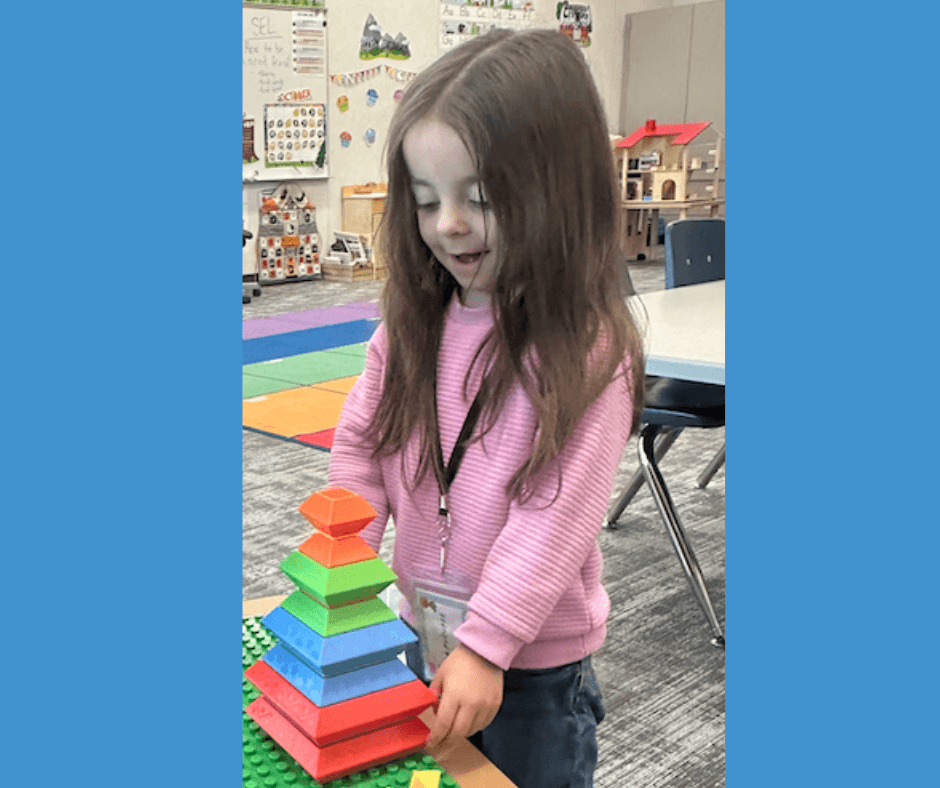
A typical Pre-K computer science class is short, structured, and fun. Mike sees each classroom for just 20 minutes. Each lesson starts with a movement activity connected to the day’s task and learning goal. Then students work together on challenges like building the highest tower with blocks, identifying patterns, or "debugging" – identifying differences they see. Every activity is simple, silly, and just right for four-year-olds, while still introducing a bigger idea from computer science.
Mike concluded, “Adding computer science to the daily curriculum proves that computational thinking and those critical durable skills can start even younger than we thought!”
PCEF has been funding Real World Learning since its inception nearly four decades ago. In 1986, a PCHS teacher hoped to send two students to Stanford Space Camp and was seeking funding to make it possible. That real-world learning opportunity became the catalyst for PCEF’s mission to fund educator-powered initiatives that inspire all Park City students to successfully reach their academic and lifelong potential.